
In the Beginning
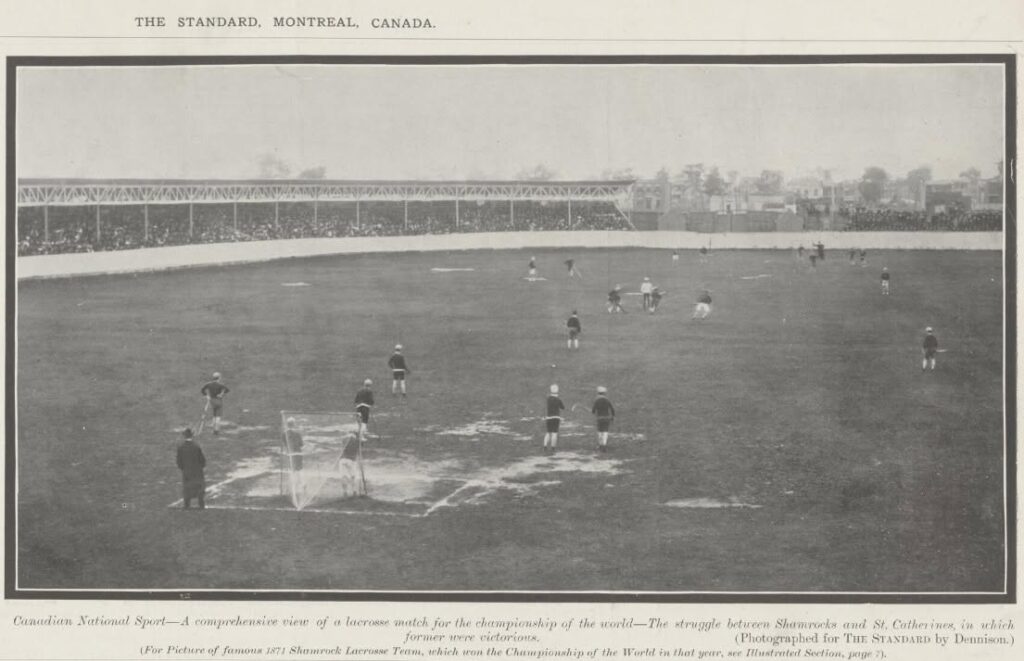
In the early 1900s, hundreds travelled to Villeray, a Montreal suburb, to watch their favourite team play Canada’s national sport: lacrosse.
The St-Laurent Street trolley now extended as far as the Montreal Shamrocks’ new playing field, replete with clubhouse and bleachers. Today, it’s the site of the Jean-Talon Market.
The Shamrocks were at their height, winning the Governor-General’s Minto Cup (the national trophy), for six out of seven years, between 1901 and 1907. The team comprised mainly hardy Irish lads from St. Ann’s Parish.
But neither the Shamrocks nor their fans knew how much their world in rural Villeray would change in the coming decade.
In 1905, the City of Montreal annexed Villeray. The tiny municipality numbered only 800 persons; it comprised a small town surrounded by farms and quarries. With the trolley line extending to the Shamrocks’ playing field in Villeray, it was natural for the burgeoning population in St.-Louis-du-Mile-End, just south of Villeray, to migrate north, among them were growing numbers of English-speaking and Italian Catholics.
Montreal underwent unprecedented growth at the turn of the 20th century, driven both by the federal government’s aggressive immigration policy and the gradual population drift from the countryside into Canada’s largest city.